
I have very vivid memories of the events surrounding my father’s death.

It was February 1991. Roy and I were newlyweds, still in that hazy “Isn’t the world a beautiful place!?” fog. I’d gone to pick up a few groceries after work, and as I crossed the railroad tracks near our house – too fast as usual – I saw my inlaws who lived over the crossroads from our apartment standing on their front porch watching me Dukes of Hazzard-it over the tracks. By the time I pulled into the driveway and got out of my car, they had already pulled in behind me.
My usually talkative mother in law Karen was white as a ghost as my father in law told me my dad wasn’t well and he’d been taken by ambulance to the hospital. My mother had called our house to let us know what was happening, and Roy had taken off for the hospital with them. My inlaws were to bring me as soon as I got home.
Just a little over the year before – shortly after he turned 40 – my father had been diagnosed with serious heart issues. He’d also had serious esophageal problems that were incredibly painful. As we drove to the hospital, I fixated on the esophageal issues, and as I always do when I’m nervous, talked a mile a minute the entire 20-minute drive, mostly nonsense, I’m sure.
When we walked in, Roy’s was the first face I saw, and before anyone said a word, I knew by the look on his face that what I feared but didn’t want to believe was true. My mother looked straight at me and said, “He’s dead, Tracey. Your father is dead.”
I felt the breath leave my lungs like I’d been punched in the gut, leaned against the wall, and slid to the floor, sobbing. Roy knelt in front of me and let me cry for a minute, then helped me to my feet.
Except – that’s not what happened. Everything up to the moment I heard the words, “Your father is dead Tracey,” is true, but what happened after, isn’t.
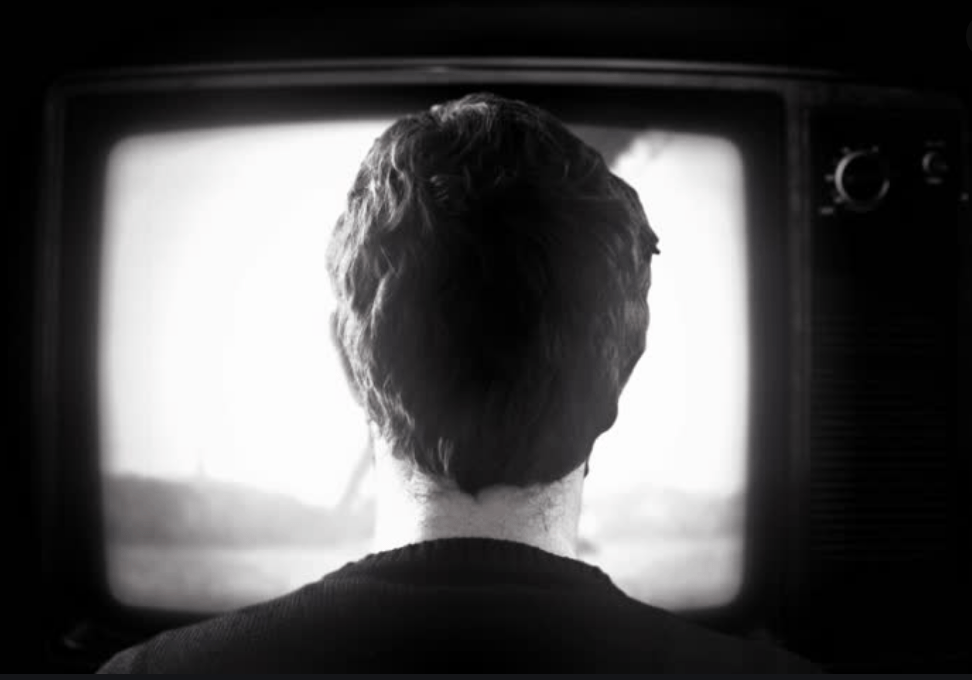
I didn’t slide to the floor, Roy didn’t kneel in front of me then help me to my feet. What really happened is that I turned to Roy, and he held me as I cried harder than I’ve cried before or since. That’s it. It was no less tragic a scene, but my memory, as clear as if I was watching it be played back on a screen, is totally inaccurate.
My memory, as clear as if I was watching it played back on a screen, is totally inaccurate.
If this were a novel, the author would consider me an “unreliable narrator” – a character who tells a story with a lack of credibility. There are different types of unreliable narrators in literature, some used to mislead the reader deliberately, others used as a plot device to make the reader question their perceptions, but both eventually reveal that they’re not to be trusted.

We are unreliable narrators in our own lives. For years, that’s how I believed events at the hospital had unfolded. It wasn’t until Roy and I had a conversation about that day I discovered that wasn’t how it happened. Other family members backed up his version, and I realized that something I had believed as fact was, in reality, fiction.
Of course that led me to question other memories, and being the nerd that I am, I went down a rabbit hole of scientific theories and conjecture on the fallibility of memory. What I learned is that our memories, like feelings, cannot be 100% trusted.
Psychiatrist and brain researcher, Dr. Srini Pillay, says our memories are like a “house of mirrors” – they reflect reality, but they’re not necessarily accurate representations of the truth. Not only do we distort information when we try to store it as a memory, sometimes we make up things that never really happened.
Back in 2006, psychologists Chad Dodson and Lacy Krueger conducted a study to explore the phenomenon of “misremembering.” They found that participants in their study invented events that never actually happened, distorted timelines, and in effect, rewrote history.
This is why we need to be careful about making ourselves the heroes or the villains in our stories. Philippians 4:8 says, “Finally, brothers and sisters, whatever is true, whatever is noble, whatever is right, whatever is pure, whatever is lovely, whatever is admirable—if anything is excellent or praiseworthy—think about such things.”
The very first challenge in that verse is to think about what is true.
We hear a lot about speaking “your truth.” What a dangerous concept. Playing with the truth isn’t playing with fire, it’s playing with fire while doused in gasoline and juggling sticks of dynamite. On the sun. In July. While someone throws hand grenades at you.
Truth, by definition, is what is real, what is factual. When people talk about their truth, what they’re really describing is their perception of events. Don’t get me wrong, it can be very real to them – look no further than my memories at the hospital back in ’91. My memory of that day is as vivid – and as warped – today as it was years ago. I can’t picture what actually happened, and when I try, it’s like I’m making it up or re-writing history.
Social media has created a narcissistic culture that’s led us to believe the world needs to hear our opinions and that the number of likes equates with truth and validation. So, our truth becomes the truth.
But no matter how real it is to us, it isn’t real. Insisting “your” truth is “the” truth isn’t only illogical, it’s contrary to what Scripture teaches. Spolier alert – it’s not new.
In “Brave Women, Bold Moves,” author Cathie Ostapchuk writes, “That ‘other voice’ – the voice of the enemy – became louder than voice of God in the moment of temptation, and drew Eve into places in herself she never knew existed…she reached out, took the fruit, and tried to spread the sickness by sharing the blame with Adam.” We know that Adam later blames Eve for his decision to eat the fruit – sadly, there’s a measure of truth, but a whole lotta lies in both of their versions of events.
This is why as believers, it’s crucial that we remember we aren’t dependent on “our truth – we follow The One who is the Truth. John 14:6, says “Jesus answered, “I am the way and the truth and the life. No one comes to the Father except through me.”
This is the truth that matters. This truth has the power of life and death. This is the truth we need to “think on.”
The truth isn’t within us – it’s outside of us. Speaking “our truth” deceives us and distracts others from the truth – the gospel of Jesus Christ that brings light and life, hope and healing. Your truth pulls focus to you, but as believers, our purpose isn’t to be the center of attention. We are background characters in a much bigger story.
So when you speak “your truth,” make sure you’re pointing your audience to Jesus. Instead of curating a life based on what you think and feel, build it on Jesus, the Way, the Truth, and the Life.


 Tracey Mac Lean Dowdy