

Up until a couple of months ago, I had never heard of the enneagram, but since then, it’s all over my social media feed and makes its way into conversations several times a week.
I’ve always been intrigued by how the mind works, the nurture vs. nature debate, and the science of personality. Maybe that’s why I married a therapist… but that’s a post for another day.
In the past, I’ve taken the Meyers Briggs (MBTI), and the DISC assessments through work, but this one was just for me. If you’re interested, The Enneagram Institute offers the test on their website. There are free versions available, but if you’re really curious, theirs is the most comprehensive and accurate.
When I took the test I discovered that I’m a Six Wing Five. If that means nothing to you, don’t worry – it’s not the focus of this post. (You can read the descriptions for all the types here.)
The description for the Six is as follows:

“The committed, security-oriented type. Sixes are reliable, hard-working, responsible, and trustworthy. Excellent “troubleshooters,” they foresee problems and foster cooperation, but can also become defensive, evasive, and anxious—running on stress while complaining about it. They can be cautious and indecisive, but also reactive, defiant and rebellious. They typically have problems with self-doubt and suspicion. At their Best: internally stable and self-reliant, courageously championing themselves and others.”

Truthfully, I wasn’t surprised. It’s pretty accurate. I’m a planner, organizer, hard worker, and fiercely loyal to those I love. Unfortunately, the negative aspects are also true. I’m plagued by self doubt and I tend to be cynical and suspicious. I joke that my longest relationship has been with anxiety – it’s not something I’m proud of, though I’m not ashamed of it either. It’s part of who I am, but I’m working on it.
That sentence is the focus of this post – bet you thought I’d never get there didn’t you?
I’ve been open about my battle with anxiety, but I’m proud to say it’s been a battle. Roy, as a psychotherapist and counselor, will tell you that for some people, getting a diagnosis is a negative, rather than a positive experience. Suddenly, the explanation for particular behaviors becomes an excuse. “You can’t be angry with me because…” or “You shouldn’t be frustrated with me because…” The good work and life change that the client had been working toward is stymied because change is hard and they’re no longer willing to put in the work to change a lifetime of self-destructive behaviors.
Now, don’t come at me for what you see as an over-simplification or minimization of mental health issues. My statements are in no way representative of everyone who has been to therapy. Most people go to counseling because they want the tools a counselor can provide. They do the work and they push through the really ugly parts to come out the other side stronger, healthier, and happier.
And, to be clear, this isn’t just a mental health issue. I’ve known a lot of people over the years who excuse their bad behavior because it’s “just who I am.”
“I know I’m moody but I have an artistic temperament and that’s just how we are.” No, you’re emotionally immature and need to learn healthy self-talk so that when you feel yourself falling into a funk, you know how to climb out.
“I have a terrible temper but I’m a redhead, what do you expect?” I expect you to be accountable for your actions and attitude and learn self-control.
“I’m a firstborn so I’m bossy and a leader. Deal with it.” Leaders lead, jerks command.
Whether you’re raising littles or still learning yourself, self-control is key to maturity. Every child has temper tantrums. They’re little balls of energy with outsize emotions they don’t know what to do with. It’s our job as parents to teach them that there’s nothing wrong with having feelings, even overwhelming ones, but it is wrong to use them as a weapon. Children who don’t learn self-control grow up to be emotionally manipulative adults.
Emotional manipulation is toxic. Dr. Abigail Brenner has a brilliant article on Psychology Today entitled “9 Classic Traits of Manipulative People.” In the article she states, “A manipulator avoids responsibilities for his own conduct by blaming others for causing it. It’s not that manipulative people don’t understand responsibility. They do; a manipulative person just sees nothing wrong with refusing to take responsibility for their actions, even while making you take responsibility for yours.”
For me to say, “It’s not my fault I’m anxious, it’s just the way I was made,” or expect everyone around me to walk on eggshells in case they hurt my feelings or stress me out is absurd – and even more – it’s emotional manipulation. It’s selfish and self-focused. Frankly, it’s emotional blackmail. You’re saying, “If you don’t accommodate me, I’ll make you’ll regret it.”
Looking at my type as an Enneagram Six, I’m proud of the hard-working, loyal, creative, problem side of my personality. The cynical, suspicious, anxious part? Not so much.
But the good news is that I don’t have to be defined by my weaknesses.
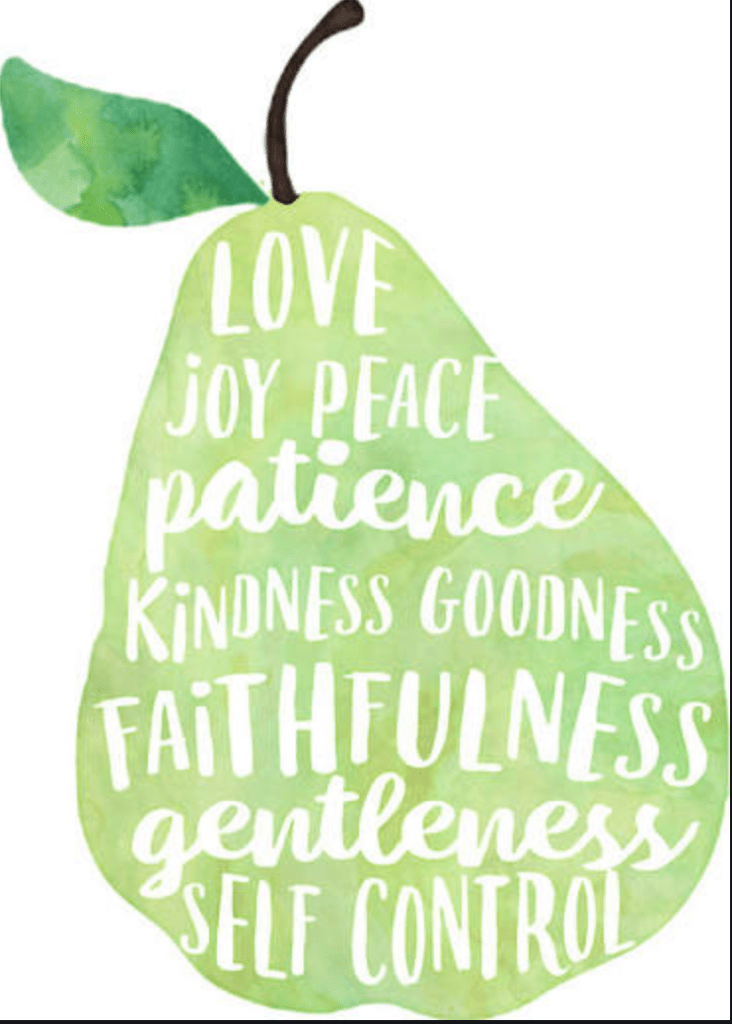
But the fruit of the Spirit is love, joy, peace, forbearance, kindness, goodness, faithfulness, gentleness and self-control…”
Galatians 5:22 – 23
Self-control is simply the discipline of delaying impulse or instant gratification for a greater purpose or cause. I once heard it explained this way – self-control is saying “no” for the sake of a bigger and better “yes.”
1 Corinthians 13:11 says, “When I was a child, I spoke and thought and reasoned as a child. But when I grew up, I put away childish things.” As parents, we try to teach our children that there are consequences for our words and actions. Human nature is naturally self-centered and we have to place external constraints until internal regulators are developed.

It’s not easy to instill those self-regulators. Ask the stressed out, bug-eyed, teeth-clenched, “I-swear-to-God-if-you-test me-one-more-time-why-didn’t-we-just-get-a-dog-instead-of-having-a-baby” mother standing over a screaming toddler in the aisle at Target.
Accountability is hard. It’s much easier to push things off onto someone or something else.
But it’s worth it.
Even though that transition from external constraints to internal boundaries can be as much fun as a bee sting in the eye, it is life-changing and life-giving. It may sound counter-intuitive, but there is freedom in having boundaries.
If you really want to live an abundant life above the constraints of your personality and emotions, ask the Holy Spirit to equip you with the self-control you need.
True self-control is a gift from above, produced in and through us by the Holy Spirit. Until we own that it is received from outside ourselves, rather than whipped up from within, the effort we give to control our own selves will redound to our praise, rather than God’s.
Desiring God
Self-control isn’t a gift we receive, we have to actively pursue it. It’s not something we can do on our own strength. Really, as a believer, learning to control yourself is really about being controlled by Christ.
"For the grace of God has appeared that offers salvation to all people. It teaches us to say “No” to ungodliness and worldly passions, and to live self-controlled, upright and godly lives in this present age,"
Titus 2:11-12
In his best-selling book, “The Purpose Driven Life,” Rick Warren says, “We are products of our past, but we don’t have to be prisoners of it.” Likewise, we are products of our personality, our nature, our environment and our experiences, but we don’t need to be prisoners of them either.
“We are products of our past, but we don’t have to be prisoners of it.”
Rick Warren, The Purpose Driven Life
Take some time this week for self-reflection. What areas of your life need work? Ask God to reveal an area where you’ve developed bad habits, and then, have the courage to follow through with making a change. Remember, you don’t have to do it on your own strength.


 Tracey Mac Lean Dowdy